
FlyingRC
AM32 75A CAN ESC
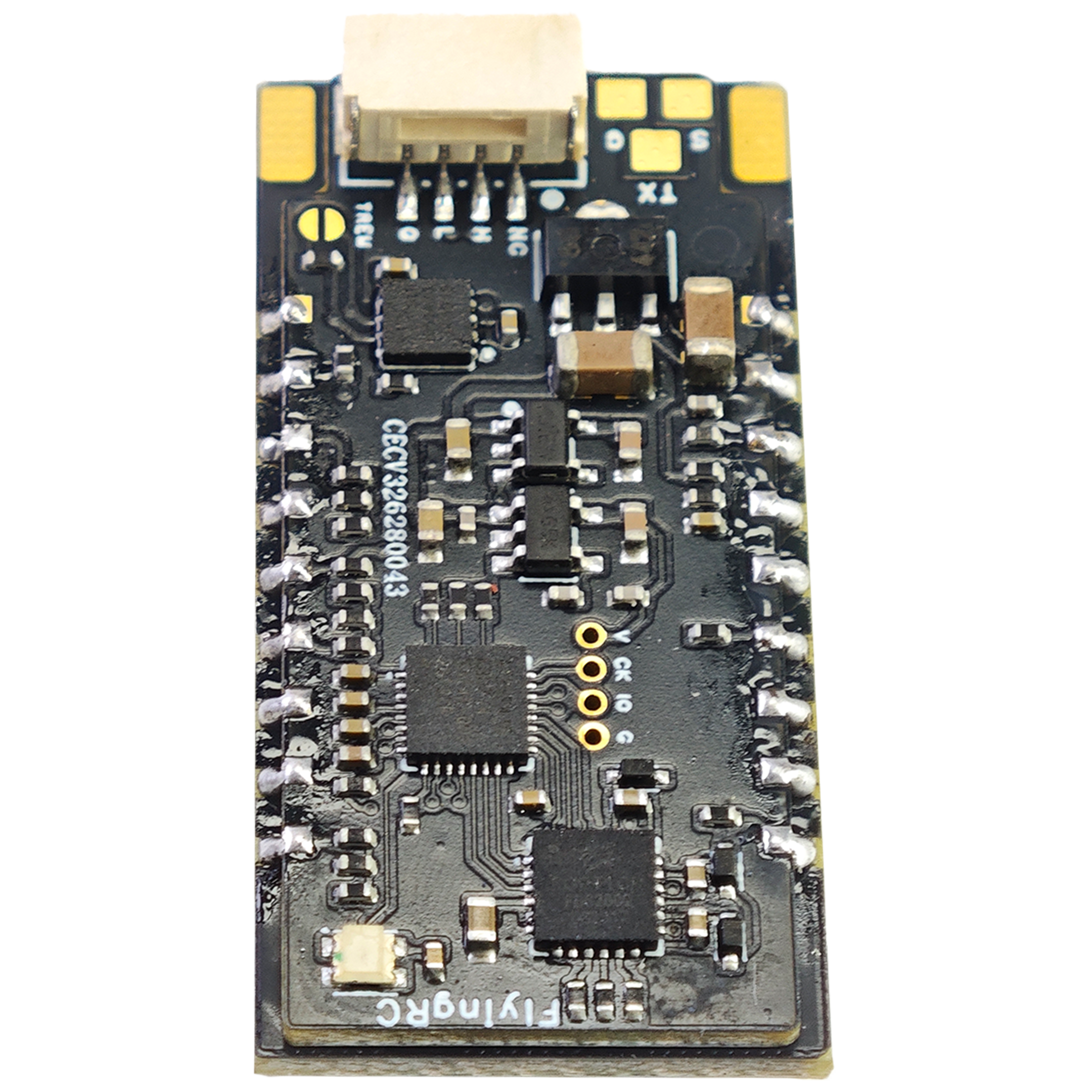
A compact 75 A single-channel AM32 ESC with an onboard CAN interface. It is designed to drive one high-current brushless motor in fixed-wing aircraft, boats, vehicles, or other builds that use a separate ESC per motor.
Standard
Confirm the CAN hardware revision and its electrical ratings with FlyingRC before connecting a battery or load. The generic 75A single-ESC parameter sheet is not verified for this CAN model; do not use its voltage, current or BEC figures as CAN specifications.
Current pricing and inventory are shown in the store.
Product overview
- Onboard CAN interface plus DSHOT150/300/600, OneShot, and PWM control support
- Approx. 38.10 x 19.16 x 9.24 mm and 7.7 g according to the dimension drawing
Key features
- The firmware downloads are only for the AT32F415KBU7-4 128 KB hardware revision. Do not use them for an AT32F421K8U7 64 KB control board; check the MCU marking first.
- FD6288/JSM6288Q gate driver and Infineon IRF7480 metal-sealed MOSFETs.
- AM32 firmware with sine-wave startup and Stall Protection support.
- Onboard CAN interface plus DSHOT150/300/600, OneShot, and PWM signal support.
- The published application BIN is a FlyingRC AM32 2.20 DroneCAN build for the AT32F415KBU7-4 hardware revision.
Suitable builds
- High-current single-motor fixed-wing aircraft.
- Boats, vehicles, and robotics using a separate ESC for one brushless motor.
- Systems that can use the product's onboard CAN interface after protocol and pinout compatibility are confirmed.
Getting started
- Remove the propeller before ESC setup, firmware work, or powered bench testing.
- Verify the GH1.25 connector pinout, CAN bitrate, and controller compatibility before applying power or relying on CAN control/telemetry.
- For SWD recovery/programming, write the application-only BIN at 0x08004000, or write the combined full-flash HEX at 0x08000000; preserve EEPROM at 0x0801F800 and back up the full device first.
- Install the included electrolytic capacitor with the correct polarity and provide airflow or heatsinking appropriate for the actual load.
- Use wire gauge, connectors, soldering, insulation, and strain relief suitable for the expected current.